
"Her Majesty": A Socio-Political History of the Beatles and the British Royal Family

A number of different groups and individuals were drawn into the Beatles’ stratosphere, ranging from intellectuals and bohemians, to aristocrats and politicians. The band had many meaningful relationships; however, no other can compare to the relationship between them and the highest power in the land: the British Royal Family.
As John Higgs suggests, there were some remarkable parallels between these two groups, mainly focused towards their shared experiences of extreme unprecedented fame and adulation. Yet there also remained an overwhelming sense of distance between the Beatles and the royal family, due largely to the opposing backgrounds of each group. As such, this resulted in a strange combination of unmeasurable similarity and staunch difference, which would give rise to a complex and unique relationship.

An in-depth study into this relationship can provide us with an insight into how the Beatles’ perceived their identity as a band. Each member may have held a slightly different view towards the royal family and the British establishment, yet as Beatles, this was something they had to negotiate collectively, as a group.
Princess Margaret’s attendance at the Hard Days Night premiere in July 1964, pictured here, was not the first time the Beatles had rubbed shoulders with royalty, and it certainly would not be the last!
The first time the Beatles met members of the royal family was at the height of British Beatlemania, on 4th November 1963, when they played the Royal Command Performance at the Prince of Wales Theatre in London.
This concert had traditionally been held in disregard. Beatles biographer Hunter Davies suggests: "it was a charity show, full of show-business establishment, minor society and rag trade moguls, all hoping for a glimpse of the royals." And on this occasion, the royals in attendance were the Queen Mother, pictured meeting the Beatles, and Princess Margaret, along with her husband Lord Snowdon.

Davies indicates the difficulty of playing the Royal Command Performance for entertainers. He states: "There is a nauseating tradition of the audience craning to see what effect each act is having in the royal box before they clap or laugh." John Lennon later said in 1970 about the show being a "bad gig…everybody’s very nervous and uptight and nobody performs well." Ian MacDonald suggests, however, that the Beatles were, in fact, "energised by the occasion" and their performance of Twist and Shout "gives an idea of the power they could generate live."
The royal family certainly did have an incredibly foreboding presence, and there would have been similarities at most of the events they attended, let alone a concert where the featured entertainers were a rock group. There was also a sense, as noted by the band’s Press Officer, Derek Taylor, that by going on the Royal Command Show and mixing with members of high society, the Beatles were betraying their fans and their working class roots, to some degree.
However, despite any mounting pressures from both the establishment and their fans, the Beatles deployed their trademark humour as a way to defuse the situation.
For example, Ringo Starr joked before the event: "I want to bang me drum for the queen mum." Paul McCartney was the first to make a joke on the evening, after a performance of She Loves You, referring to veteran singer and comedian Sophie Tucker as their "favourite American group," before playing the show-tune Til There Was You; a song that MacDonald suggests was "wheeled out at strategic moments, such as the Royal Command Performance."
This display of humour was then brought up a few notches with a comment made by Lennon before the performance of Twist and Shout. The iconic line reads as follows: "Thank you. For our last number, I’d like to ask your help. Would the people in the cheaper seats clap your hands, and the rest of you, if you’ll just rattle your jewellery."

Shiela Whitely identifies this moment as one of particular significance. Not only did Lennon’s comment make the Beatles instantly admirable to members of high society, including the royal family, it also displayed a "pungent irreverence" for the establishment. The Beatles were somewhat hesitant to perform on this occasion, and they had indicated in prior interviews that they had no intention of altering their act or their accents for a crowd made up of mostly high society.
Nevertheless, as the first occasion in which the Beatles rubbed shoulders with the British royal family, they navigated the situation remarkably well, and to their benefit. Lennon’s comment secured them headlines in the newspapers, and they became hugely admired. However, there was also an underlying notion that they weren’t prepared to simply fall into line as other popular entertainers before them had done, thus marking the beginnings of a complex relationship.
The relationship between the Beatles, now international stars, and the British royal family continued, in 1964, much in the same way as it had the previous year.
The one difference, however, as Higgs suggests, is that with the rise of Beatlemania, the Beatles "now had access to…strange areas of society" and what he means here, in particular, is high society. They each had different individual responses to their newfound company. Lennon was the most cynical, believing the class system to be absurd, while McCartney was the most positive and ambitious, seeing their move into areas of established society as one of progress.

When the Beatles arrived in Australia, in June, such was the reception the band received, that comparisons were drawn to the royal family’s visit in 1963. Over 300,000 people are estimated to have greeted the Beatles in Adelaide, pictured here, far exceeding the number of people who came to greet Queen Elizabeth and Prince Philip. George Harrison later joked about this, saying: "there were more people there than came to see the Queen. I should think so, she didn’t have any hit records." This is one of the earliest comparisons that would be drawn between the Beatles and the British royal family; comparisons that would become an integral element of their later relationship.
Also in 1964, the Beatles had another close encounter with the royals, on this occasion, Princess Margaret and Lord Snowdon who attended the World film premiere of A Hard Days Night in London, on July 6th.
Princess Margaret’s frequent appearances at such events did not come as a surprise to other members of the royal family. As Craig Brown suggests, Margaret had a strange interest in Bohemian lifestyles, although "she never quite understood the stuff and nonsense to which to she found herself drawn." Nevertheless, her attendance at events that celebrated arts and music were reflective of these interests, and meeting the Beatles was no different. The strength of their relationship undoubtedly grew, here, however, it is interesting to think what she would have made of one particular scene in A Hard Days Night, in which Lennon appears to mock a ribbon cutting ceremony with the band’s tailor.
A continued mutual respect was starting to develop between the Beatles and the British royal family in 1964. Yet, there remained a sense of rebelliousness, rejection and irreverence towards the establishment, which was an underlying element of the Beatles’ public image and thus would further be challenged in the following years.
The relationship between the Beatles, the British establishment and the royal family took on an entirely new meaning in 1965. In June, it was announced that the Beatles were to be awarded Members of the British Empire, MBEs.

The decision to honour the band was officially in recognition of their impact on British exports and the balance of trade, however, Higgs identifies the move as a "profoundly political act by [prime minister] Harold Wilson", pictured, saying that the Beatles had become something of "a wild card in British society, which could be weaponised by a canny politician." The Beatles formed part of a new, alternative vision for Britain of arts and creativity, and people with their backgrounds had not been given awards such as MBEs before. There was, as such, a considerable backlash, with a number of previous recipients, such as war veterans, returning their medals in protest. They felt the award had lost its value in being given to a pop group. However, the response was largely mixed, and many people did praise the Beatles for their contributions.
The impact on the Beatles’ public image was therefore varied. On the one hand, as Higgs notes, "the establishment reacted so angrily to the honouring of the Beatles, whether they recognised it consciously or subconsciously, it was an attack on the status quo, which suited them well." On the other hand, it could be argued that the MBEs indicated a desire to change the status quo. The Beatles were becoming representatives of a modern Britain: a country that celebrated arts and culture. As Whitely suggests, "it was a first step into today’s world where celebrities are rewarded for their services to Queen [King] and country, and an indication that the separation between high culture and popular culture was on the wane."
Also important to note is the response of the Beatles themselves to being awarded MBEs, as their identity as a band, and as individuals, was brought under question here.
This was also the first occasion in which any member of the Beatles would meet Queen Elizabeth II. Unfortunately, there are no photographs of this, but memories of the day vary wildly. Some stories, for example, include antics such as smoking a joint in the palace toilets, as well as cracking jokes and walking strangely in front of the Queen.
When questioned in interviews about the MBEs, the band appeared pleased and honoured to have received them. However, as Higgs suggests, the negative implications towards the band’s public image that might have resulted from accepting honours, were not yet fully realised.

Lennon’s initial response was that the awards were "for exports", which Whitely suggests can be interpreted both as an "astute recognition of the Beatles’ real value to the country, and as a refusal to acquiesce in the 'somewhat patronising endorsement' of their artistic merit." Harrison also expressed cynicism, later referring to the MBE as "the lowest honour you can possibly get" and joked about how they were rewarded for "all we did for Great Britain, selling all that corduroy and making it swing, and they just gave us that bloody old leather medal." The sense of irreverence towards the establishment remained strong, therefore, and the Beatles were no doubt aware that the decision to award them MBEs was largely a political one.
However, despite this, the MBEs also represented a continued level of mutual respect between the British royal family and the Beatles. They clearly felt some pride at being awarded them and McCartney later commented saying: "We were very impressed…we were honoured, genuinely."
It was certainly evident that the royal family maintained a strong admiration and respect for the Beatles in 1965, enough to formally recognise their services to the country. The awarding of MBEs, although political in nature, was to be the unquestionable high point of this unique relationship; one that would soon come under strain.
During the period between 1966 and 1968, there were no major developments in the relationship between the Beatles and the British royal family.

This was a time during which the Beatles made the decision to stop performing live and started to withdraw somewhat from public life, as much as a Beatle could, anyway. The focus grew more towards studio sessions, where experimentation and new recording technology resulted in some of the band’s most critically acclaimed albums, including Revolver and The White Album.
The Beatles’ political attitudes also shifted during this period. Gone was the quiet, begrudging acceptance of high society, they now presented a different image, wherein their distaste for the establishment was made very clear. This was achieved through songwriting, and can be seen most notably in Harrison’s Taxman, which railed against the labour government’s high-income tax. They also experimented more freely with drugs and spirituality during this period, which drove a wedge between them and the establishment. The death of manager Brian Epstein, in 1967, also had a major impact, as he was the driving force who had consistently strived to make the Beatles more publicly presentable.
The relationship between the band and the royal family, however, did not necessarily suffer, as a result. Although one indicator of the changes taking place occurred when the Queen was asked her opinion on the records Penny Lane and Strawberry Fields Forever, to which she reportedly replied: "The Beatles are turning awfully funny, aren’t they?"
The Beatles begun 1969 with an outward display against the establishment. In January, the band gave their final live performance on the roof of their Apple offices in Savile Row, London, an area associated with wealth and privilege.

An event that has been brilliantly brought to life in the recent Get Back documentary and Let It Be film, it demonstrates a clash between the Beatles, and members of high society who lived and worked in the area, many of which complained to the police. This only served to bolster the Beatles’ anti-establishment image, with McCartney remarking that the band being arrested for playing on the rooftop would have been a fitting end to the Let It Be film. As Higgs writes: "[the rooftop gig] was a scenario that neatly symbolised the impact of the Beatles on the British establishment."

The song Her Majesty was released on the album Abbey Road in September. For the most part, commentators have found little to analyse in the song’s 23 seconds. MacDonald describes Her Majesty as a "party throwaway" that was only tacked onto the end of the album at the last minute, whilst Mark Lewisohn writes that "a simpler recording could not be imagined" and its inclusion on Abbey Road was more or less, likely an accident. There is no direct reference to Queen Elizabeth in the song, yet the lyrics might convey some vague indication towards the royal family’s diminishing impact in modern Britain, most notably in the opening line: "Her Majesty’s a pretty nice girl, but she doesn’t have a lot to say."
If the lyrics in Her Majesty were rather ambiguous on the Beatles’ feelings towards the establishment and the royal family, then John Lennon’s decision to return his MBE in November can be viewed as a statement of clear intent.
This occurred during a period towards the end of the Beatles’ career, in which they were more readily voicing their opinions, with Lennon at the forefront, as he often was in the Beatles’ political activities. As Whitely suggests, the band seemed to project a slight disregard for serious political issues, something, that was left to John and Yoko, signified by their "much publicised quest for peace."

Looking back at being awarded an MBE in 1968, Lennon remarked: "why, what for? We didn’t believe it. It was a part we didn’t want…then it just all seemed part of the game we’d agreed to play." In identical handwritten letters addressed to the Queen, Prime Minister and Central Chancery, Lennon stated he was returning his MBE: “in protest against Britain’s involvement in the Nigeria-Biafra thing [the Nigerian Civil War], against our support of America in Vietnam, and against Cold Turkey [the record by the Plastic Ono Band] slipping down the charts." Signed ‘John Lennon.’
Despite the Beatles’ having almost broken up at this stage, they remained closely connected in their public image. The actions of one Beatle, therefore, as Starr later remarked, still impacted upon all of them, and as such, Lennon’s actions were indicative of the band’s rejection of the establishment and possibly also, the royal family.
In addition, Lennon, who had, at times, compared the fame and adoration of the Beatles to that of the royal family, even showing empathy towards them, instead attempted to distance himself from any comparisons. Again he said of the MBE in 1968: “We were just getting at the people who believed in such things. I really think the Queen believes it all, she must. I don’t believe in John Lennon, Beatle, being different from anyone else because I know he’s not. I’m just a feller. But I’m sure the Queen must think she’s different.”
Whilst the Beatles’ attitudes of rejection and irreverence towards the establishment had not necessarily changed since their beginnings, they had certainly become more widely publicised. By 1969, the band became increasingly less concerned about the possible repercussions of voicing their political views.
Whilst Lennon’s decision to return his MBE was highly controversial, it is not to say that the relationship between the Beatles as a band and the British royal family turned sour or grew particularly negative. Simply put, when the Beatles disbanded, there came an end to all relationships they had accrued as a band, including, of course, the strange and complex relationship between them and the royal family.
After the Beatles disbanded in 1970, their views towards the royal family and the British establishment could now be voiced more publicly, and individually.
Lennon, always the most politically inclined Beatle, was very dismissive of the overall impact of the sixties, saying in 1970: “…nothing happened except we all dressed up. The same bastards are in control, the same people are runnin’ everything, it’s exactly the same.” He was certainly outspoken in his irreverence towards the establishment. And his hatred of the class system in Britain ultimately led him to move to New York, where he spent the remainder of his life.

McCartney maintained his fascination and admiration towards certain areas of high society, and has continued to view his relationship with the royal family as largely indicative of success and progress. He met Queen Elizabeth on a number of occasions and was knighted by her in 1997, for his services to music, an award that was later elevated to make him a Companion of Honour in 2018. He described the day of his knighthood as “one of the best days ever. I felt very honoured to be offered a knighthood and of course it would have been rude to turn it down!”
Harrison, like Lennon, continued with a view of cynicism towards the establishment and high society. He saw it as a farce, and a charade. He was insulted when only McCartney was offered a knighthood and later turned down the award of Order of the British Empire (the OBE, which is essentially an extension of the MBE), in 2000. However, he never held any ill feelings towards the monarchy, ultimately describing the Queen as being “all right.”

Starr also viewed the British establishment and the workings of high society as somewhat farcical, yet, he has been rather more accepting towards it. He was knighted in 2018 for his services to music, saying: “it means a lot actually…it means recognition for the things we’ve done. I was really pleased to accept this.” He also added, with a bit of trademark humour, that he would proudly wear his medal at breakfast.
Everything about the Beatles’ meteoric rise to international fame was unprecedented. As a result of this, they gained access to strange areas of society; areas that neither anyone from their background, or anyone in a pop group, had previously witnessed or experienced.
The establishment’s response to the Beatles was certainly mixed. On the one hand, they were celebrated for their contributions to Britain, heralding in an era of youth and modernity. But on the other hand, they were dismissed as being a simple, unsophisticated pop group, with little real impact. And it was these hugely contrasting viewpoints that suggests exactly why the Beatles were utilised throughout the 1960s as such a divisive and effective political tool.
Their relationship with the British royal family, however, was far less antagonistic. This was a relationship of mutual respect and admiration for one another, across two unmeasurably different, and seemingly opposed, groups of people.
In fact, not only was there a great level of respect in this relationship, but also a number of similarities. They both experienced fame to the absolute extremes and after the Beatles rose to success, it was clear that, much like the royal family, they would never again experience the chance to lead normal lives.
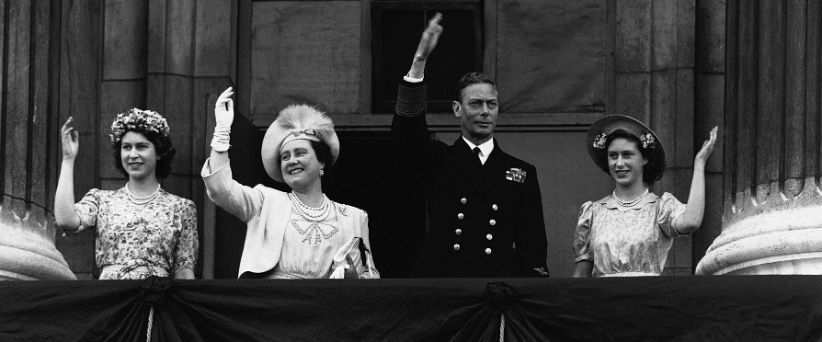

It was Lennon who felt this connection most strongly, and who was especially empathetic, saying that "[the royal family] must have a hard time trying to be human beings. I don’t know if any of them ever make it…you feel sorry for people like that, because it’s like us – only worse.” This is, perhaps, the reason for his complete rejection of the establishment, because he felt such a strong connection towards it, and this scared and worried him.
In this article I have shed light onto a fascinating area that has received relatively little academic attention, showing how an in-depth study into the relationship between the Beatles and the British royal family can provide us with an insight into not only how the Beatles’ perceived their identity as a band, but also how they collectively navigated their fame, success and wider impact, during a period of unprecedented socio-political change.


Comments